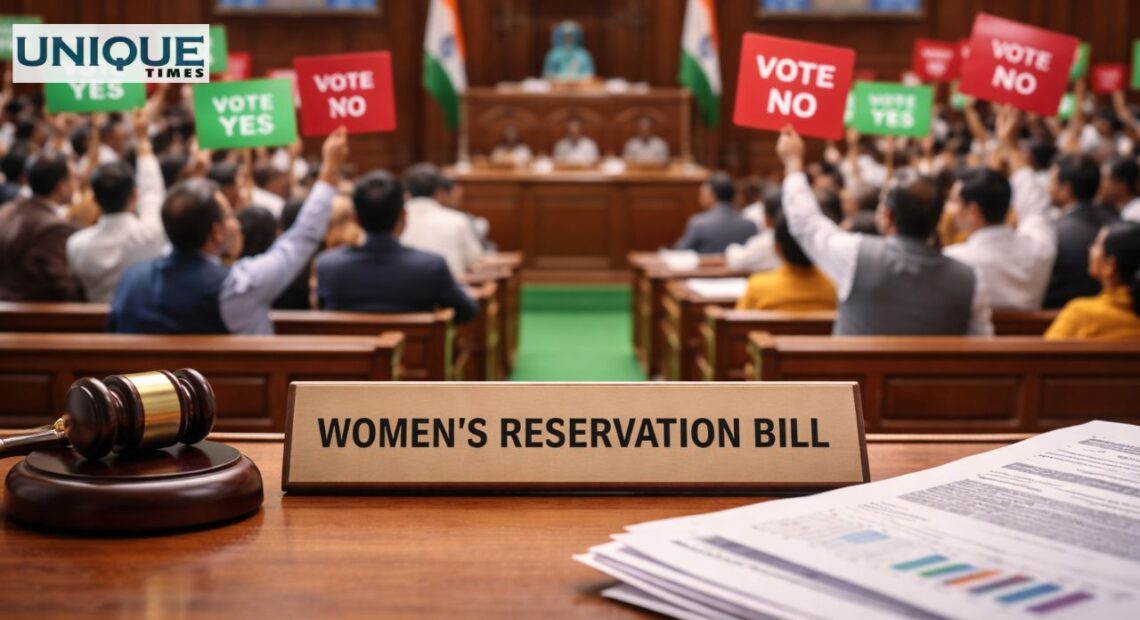
India’s government failed to pass a key bill aimed at expanding parliament and advancing women’s reservation, marking a rare legislative setback for Prime Minister Narendra Modi. The proposal sought to increase the number of seats in the lower house and state assemblies, while enabling a one-third quota for women lawmakers, but it fell short of the required two-thirds majority in parliament.
The bill faced strong opposition despite broad support for women’s representation, as critics objected to linking the quota to a nationwide redrawing of constituency boundaries. Opposition leaders, including Rahul Gandhi, accused the government of attempting to manipulate the electoral system under the guise of promoting women’s participation. The government rejected these claims, insisting the changes were necessary to reflect population shifts.
In the final vote, 298 lawmakers supported the bill while 230 opposed it, well below the threshold needed for constitutional amendments. Although legislation passed in 2023 had approved a women’s quota in principle, its implementation remains tied to a delayed census process. Currently, women make up a small share of India’s lawmakers, highlighting the ongoing challenge of improving political representation.