RBI Faces Tough Rate Decision as Oil Shock, Weak Rupee Cloud Outlook
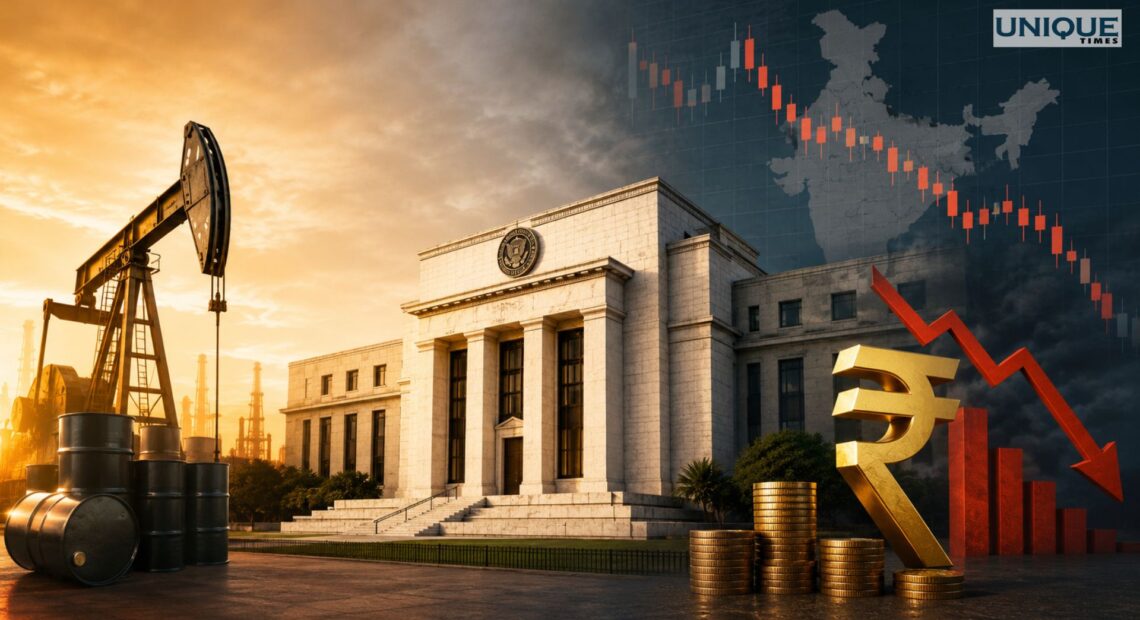
India’s central bank faces one of its most challenging monetary policy decisions in recent years as rising oil prices, a weakening rupee, and concerns over a poor monsoon threaten to fuel inflation while slowing economic growth. The Reserve Bank of India (RBI), which concludes its three-day policy meeting on Friday, is widely expected to keep its benchmark repo rate unchanged at 5.25%, despite growing market expectations of future rate hikes. Economists say the RBI is balancing the need to support the currency against the risk of undermining growth.
The rupee has fallen to record lows since the outbreak of the Iran conflict in February, while higher crude oil prices have intensified pressure on India’s import-dependent economy. Interest rate swaps are now pricing in nearly 100 basis points of monetary tightening over the next year, although most economists surveyed expect the RBI to hold rates steady for now. Analysts suggest the central bank may instead adopt a more hawkish tone, signaling readiness to act if inflationary pressures worsen.
The RBI is also expected to revise its economic forecasts, with several economists predicting higher inflation and slower growth than previously estimated. Rising energy costs and forecasts of the weakest monsoon in over a decade have raised concerns about food price inflation and broader economic risks. While some analysts advocate a precautionary rate hike to support the rupee, others believe the central bank will rely on stronger guidance and alternative measures to stabilize the currency amid heightened uncertainty.
Pic Courtesy: google/ images are subject to copyright