New India – Connecting & Engaging Youth

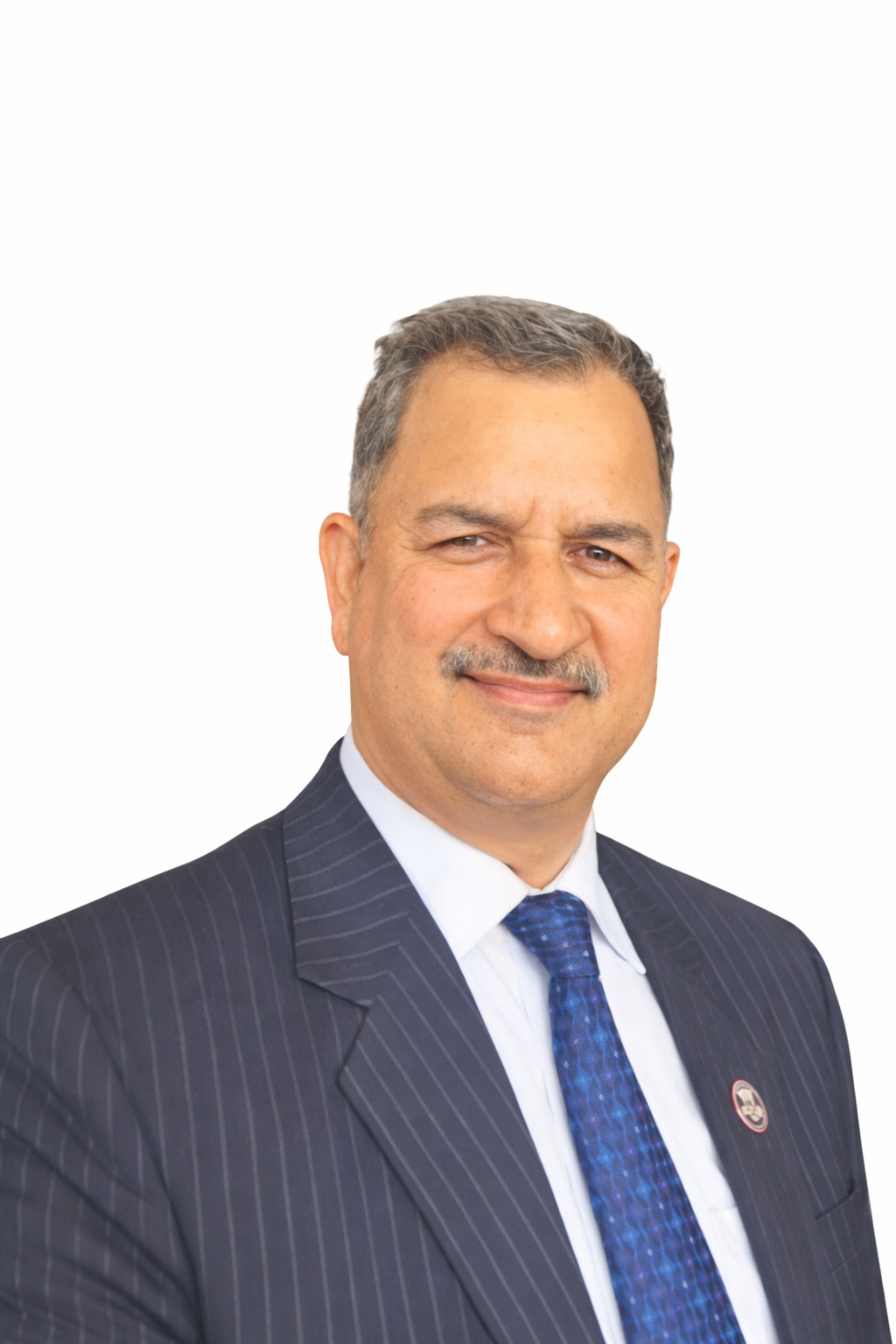
Ravi Saini
Associate Editor, Unique Times &
CEO, RSW (Resetting Sustainable
Wealth) Group
Transforming Youth to become Responsive from Reactive – India is often described as the world’s youngest major economy, and rightly so. But a young population by itself does not guarantee a young nation. Demography provides an opportunity; it is the quality of education, employment, values, entrepreneurship and social participation that determines whether that opportunity becomes a dividend or a demographic challenge. At a time when India is aspiring to become a developed nation, the real question is not simply whether our youth are employable, but whether they are prepared to become responsible stakeholders in India’s transformation. The distinction is important. A reactive generation waits for circumstances to change before responding to them. A responsive generation understands its responsibility towards society and actively participates in creating those circumstances.
For years, we have told our youth to be responsible. We expect them to respect institutions, work hard, build careers, support families, contribute to society and become good citizens. Yet responsibility cannot be demanded in isolation. It has to be supported by opportunity, purpose and an environment in which young people can see a meaningful future for themselves. If a young person grows up in a village where quality education, healthcare, employment, sports infrastructure and entrepreneurial opportunities are limited, it is entirely natural for that person to look towards a city. The problem, therefore, is not the aspiration of our youth. The problem is that our development model has often made migration the default route to fulfil that aspiration.
This is where India needs to think about Youth, Rural Economy and the Case for Vaidik Villages
The next phase of India’s development should not merely be about building bigger cities. It should also be about creating better villages—villages where modern economic opportunities, technology, education, healthcare, sports, wellness, culture and sustainability converge. This is the larger idea behind Vaidik Villages. The concept should not be misunderstood as an attempt to recreate an ancient society or take India backwards. On the contrary, a modern Vaidik Village can represent one of the most forward-looking models of rural development: a community rooted in India’s civilisational wisdom but equipped with contemporary technology, modern infrastructure and global economic connectivity.
The word Vaidik carries a deeper meaning than simply referring to an ancient period. At its philosophical core is the idea of harmony—between human beings and nature, between individual prosperity and collective welfare, between knowledge and responsibility, and between material development and inner well-being. These principles have enormous relevance in a world struggling with climate change, urban congestion, lifestyle pressures, social fragmentation and increasing pressure on natural resources. India has an opportunity to reinterpret these principles for the 21st century and demonstrate that development does not necessarily have to mean abandoning the village for the city.
For decades, rural migration has been considered almost inevitable. A talented young person leaves the village for a nearby town, then perhaps moves to a metropolitan city, and eventually builds a career far away from the community in which he or she was raised. Families have often celebrated this journey because it represents progress. There is nothing inherently wrong with migration. Mobility is an important part of economic development. But the question India should now ask is whether migration should remain the only pathway to aspiration. What if a young engineer could work for a global company while living in a sustainable village? What if an entrepreneur could build a technology company from a rural innovation centre? What if a doctor could establish a modern healthcare and wellness practice in a village? What if an agricultural family could transform itself from a producer of raw commodities into a branded food-processing enterprise serving national and international markets?
And what if a young person could build an entire career through sports and yoga without having to leave the village? This question deserves far greater attention.
Sports and Yoga: From Recreation to Career
For generations, sports in India have often been treated as an extracurricular activity rather than a serious career pathway. Parents have traditionally encouraged children to concentrate on academics, while sport has been regarded as something to pursue after studies. Yoga, despite being one of India’s greatest civilisational contributions to the world, has similarly remained underutilised as a structured career and economic opportunity. That mindset needs to change.
The modern sports economy extends far beyond becoming a professional athlete. It includes coaching, sports science, physiotherapy, nutrition, fitness training, sports psychology, sports management, event management, broadcasting, digital content, equipment manufacturing, sports tourism, rehabilitation, performance analytics and entrepreneurship. Yoga similarly offers opportunities in teaching, wellness, preventive health, education, corporate wellness, tourism, research, digital platforms and international programmes.
A Vaidik Village can bring these opportunities together and make Sports & Yoga a genuine career choice for rural youth and active people.
Imagine a village with a professionally designed sports academy, yoga and wellness centre, athletics facilities, football and cricket grounds, indoor sports, traditional Indian sports, fitness and rehabilitation facilities, and spaces for sports science and performance training. Young people from surrounding villages and districts could train there without having to migrate to a metropolitan city. Talented athletes could be identified at an early age, while others could build careers as coaches, trainers, physiotherapists, nutritionists, referees, sports managers and entrepreneurs.
Yoga could form the second pillar of this ecosystem. A young person with an aptitude for yoga should not be told that it is merely a hobby. With appropriate training and certification, yoga can become a profession with local, national and international opportunities. A Vaidik Village could develop yoga teachers, wellness practitioners, instructors, researchers and entrepreneurs who serve both the domestic market and the rapidly expanding global wellness economy.
This would also create an important bridge between sports, yoga and wellness.
Sports develop physical strength, discipline, teamwork and resilience. Yoga develops balance, concentration, flexibility, awareness and inner stability. Together, they can create a powerful framework for youth development. The objective should not be to produce only champions. It should be to produce healthier, more disciplined, confident and responsible citizens.
This is precisely where the concept of responsive youth becomes meaningful. A young athlete learns that talent without discipline is insufficient. A young yoga practitioner learns that physical capability must be accompanied by mental balance. A young coach learns responsibility towards others. A sports entrepreneur learns how to create employment. A community learns that physical activity is not merely entertainment but an investment in human capital.
The Vaidik Village as a Sports and Wellness Hub
A Vaidik Village should therefore not simply have a playground attached to it. Sports and yoga should be integrated into the economic and educational architecture of the community.
The village could potentially become a district-level Sports, Yoga and Wellness Hub, attracting students, athletes, coaches, wellness seekers and visitors. Training camps could generate local hospitality demand. Sports events could bring visitors. Yoga retreats could create international tourism opportunities. Local youth could find employment in coaching, hospitality, fitness, nutrition, event management and facility operations.
This can create an economic multiplier.
A young person who may otherwise migrate to a city to become a fitness trainer could build a career locally. A talented footballer could train locally while pursuing education. A yoga instructor could teach both Indian and international clients through digital platforms. A physiotherapist could serve athletes and the wider community. A nutritionist could develop locally sourced wellness programmes. A sports entrepreneur could create an academy serving multiple districts.
The village becomes an ecosystem of opportunity.
This is particularly important because the future workforce will increasingly demand multiple career pathways. Not every young person needs to become an engineer, doctor, lawyer or government employee. India needs coaches, designers, athletes, fitness professionals, wellness practitioners, entrepreneurs, creators, technicians, managers and skilled specialists of every kind.
Sports and Yoga can help expand the definition of a successful career.
Reverse Migration Needs a Reason
- Simply telling young people to return to villages will not work.
- Romanticising rural India cannot reverse migration.
- There must be an economic and aspirational reason.
Youth will return when the village offers dignity, opportunity and quality of life.
A successful Vaidik Village could therefore integrate sustainable housing, renewable energy, water conservation, modern agriculture, digital connectivity, quality education, healthcare, sports, yoga, wellness, entrepreneurship and community life within a single development model. Instead of treating housing, education, healthcare, employment and the environment as separate schemes or private projects, they can be planned together around the needs of the community. The village then becomes more than a residential settlement. It becomes an economic and social ecosystem.
The technology to make much of this possible already exists. What is missing is integration.
A Vaidik Village can provide precisely that integration. It can combine renewable energy with sustainable housing, precision agriculture with food processing, digital connectivity with remote employment, education with vocational skills, sports with professional training, yoga with wellness, and local culture with tourism. The result is a village that is simultaneously productive, healthy, educated, connected and aspirational.
The Village as a Living Campus
Perhaps the most powerful way to imagine a Vaidik Village is not as a rural settlement, but as a living campus. A campus where life itself becomes education.
A young person can learn agriculture in the morning, attend an AI-enabled classroom in the afternoon, train in a sports academy or yoga centre, work on a digital enterprise in the evening and participate in cultural or community activities at night. Such a model can also create intergenerational learning.
- The farmer teaches the entrepreneur about soil.
- The entrepreneur teaches the farmer about markets.
- The technologist brings digital tools.
- The athlete brings discipline.
- The yoga practitioner brings balance.
- The artisan preserves traditional knowledge.
- The teacher develops young minds.
- The senior citizen contributes experience.
- The young person brings energy.
- Everyone becomes a stakeholder.
- That is the essence of a responsive society.
India Cannot Urbanise Its Way Out of Every Problem
India needs world-class cities. But India cannot build its future exclusively through megacities. Over-concentration creates its own costs: expensive housing, traffic congestion, pollution, pressure on infrastructure, social isolation and escalating living costs. Meanwhile, villages often possess underutilised land, natural resources, cultural capital and human potential.
The opportunity is to connect these two Indias rather than choosing one over the other.
Smart cities and smart villages should become complementary—not competing—visions.
A young professional should not have to choose between ambition and roots. A family should not have to choose between a good lifestyle and rural surroundings. A child should not have to leave the village to receive quality education. A farmer should not have to depend solely on raw agricultural production. And a young athlete should not have to migrate simply because the nearest serious sports infrastructure is hundreds of kilometres away.
The objective should not necessarily be to stop migration. The objective should be to create choice.

From Migration to Circulation
India needs a system of circular economic opportunity in which knowledge, capital and talent move in both directions. Young Indians may study in cities and return to villages. Professionals may work for global companies while living in rural communities. Entrepreneurs may establish their headquarters in villages while serving customers across the world. Urban investors may invest in rural enterprises. Universities may establish rural innovation centres. Sports academies may create district-level talent pipelines. Yoga and wellness centres may connect local practitioners with international audiences.
This creates a new concept:
Reverse migration not as a retreat, but as progression.
A young person returning to the village with a degree in sports science is bringing knowledge home. A yoga instructor returning after international exposure is bringing a global market home. An entrepreneur establishing a sports academy is bringing opportunity home. The village becomes a platform rather than a limitation.
The New Definition of Success – For decades, Indian parents encouraged their children to leave the village. “Go to the city. Build a career. Make something of yourself.”
Perhaps the next generation can hear a different message: “Build something here—and take it to the world.”
That is a profound change. The village should no longer represent where one came from. It can represent where one chose to build. The young entrepreneur who creates 50 jobs in his village should be celebrated as much as the professional who joins a multinational. The farmer who builds a successful sustainable food brand should be recognised as an entrepreneur. The coach who develops national-level athletes should be recognised as a nation-builder. The yoga teacher who takes India’s wellness knowledge to global audiences should be recognised as an ambassador of Indian knowledge. The doctor who establishes a preventive wellness centre should be recognised as a community leader.
And the young person who returns home after acquiring knowledge elsewhere should not be viewed as having failed to make it in the city. He or she may actually be bringing the future home.
From Reactive Youth to Responsive India
India’s demographic dividend will not automatically become an economic dividend. Young people need opportunity. But opportunity alone is not enough. They need purpose. They need environments where responsibility becomes rewarding and where contribution becomes aspirational.
That is why the idea of Vaidik Villages deserves serious consideration—not as a cultural experiment, but as a potential development model for 21st-century India. The objective is not to take young Indians backwards.
It is to give them a reason to move forward without having to leave their roots behind.
- A village powered by clean energy.
- A school powered by knowledge.
- A farm powered by technology.
- A sports academy powered by talent.
- A yoga centre powered by India’s civilisational wisdom.
- A healthcare system powered by prevention.
- An economy powered by entrepreneurship.
- And a community powered by responsibility.
That could be the Vaidik Village of tomorrow.
Perhaps the greatest success of such a village will not be measured by how many houses are constructed or how many facilities are established. It will be measured by how many young people who once felt compelled to leave eventually decide that they can build their future there. That will be the true meaning of reverse migration. Not a return to the past.
A Return With Purpose
India’s demographic dividend will become meaningful when young people become creators of opportunity rather than passive seekers of it; when they become custodians of their communities rather than temporary residents; and when their aspirations become aligned with the larger aspirations of the nation.
The journey from Reactive Youth to Responsive Youth therefore represents much more than a change in attitude. It represents a new development philosophy.
One where the village is not the place from which India’s youth must escape, but one of the places where India’s future can be built.
- One where technology does not erase tradition, but strengthens it.
- One where modernity does not demand cultural disconnection.
- One where sports and yoga are not merely extracurricular activities, but legitimate and respected career choices.
- One where wellness becomes an economic opportunity.
- One where young people can build globally relevant careers while remaining locally rooted.
- And one where sustainable wealth is created not just for individuals, but for generations.
The next great migration of India’s youth may not be from villages to cities. It may be from opportunity-seeking to opportunity-creating—and, for many, back to the villages they once left behind. Reactive Youth → Responsive Youth. Rural Migration → Reverse Migration. Sports & Yoga → Careers & Livelihoods. Ancient Wisdom → Modern Innovation. Sustainable Wealth → A Stronger Bharat.
Pic courtesy: google/ images are subject to copyright