India’s Privacy Law Faces Supreme Court Challenge
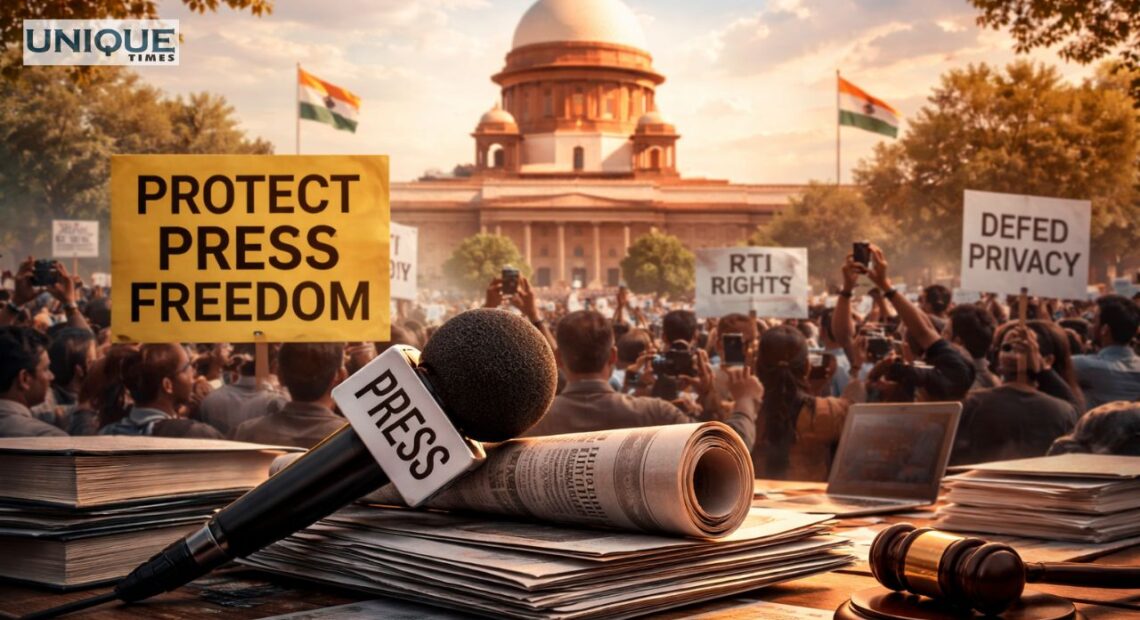
India’s new Digital Personal Data Protection Act, enacted in November, is facing legal challenges from transparency activists and journalists who argue it undermines the 20-year-old Right to Information (RTI) law. Critics say the law excludes “personal information” from disclosure, even when in the public interest, potentially allowing the government to withhold critical data on officials or contractors, which activists warn threatens participatory democracy and open governance.
Journalists express concern that the law’s provisions could severely limit reporting. It imposes fines of up to $27 million on social media and tech firms for non-compliance, without exemptions for press activities. Media groups, including the Editors Guild of India and The Reporters’ Collective, say this could force reporters to seek consent from individuals or companies before publishing, chilling investigative journalism and accountability reporting.
The government maintains that the law balances individual privacy with transparency and denies curbing access to information. India’s press freedom ranking has slipped over the past two decades, and the Supreme Court hearings on March 23 will decide whether the amendment to the RTI law stands. Legal proceedings could take several months before a final verdict.
Pic courtesy: google/ images are subject to copyright