Hampi: Where Every Stone Tells a Story
By
Aruna Rathod
Feature Writer | Travel, Food
& Lifestyle
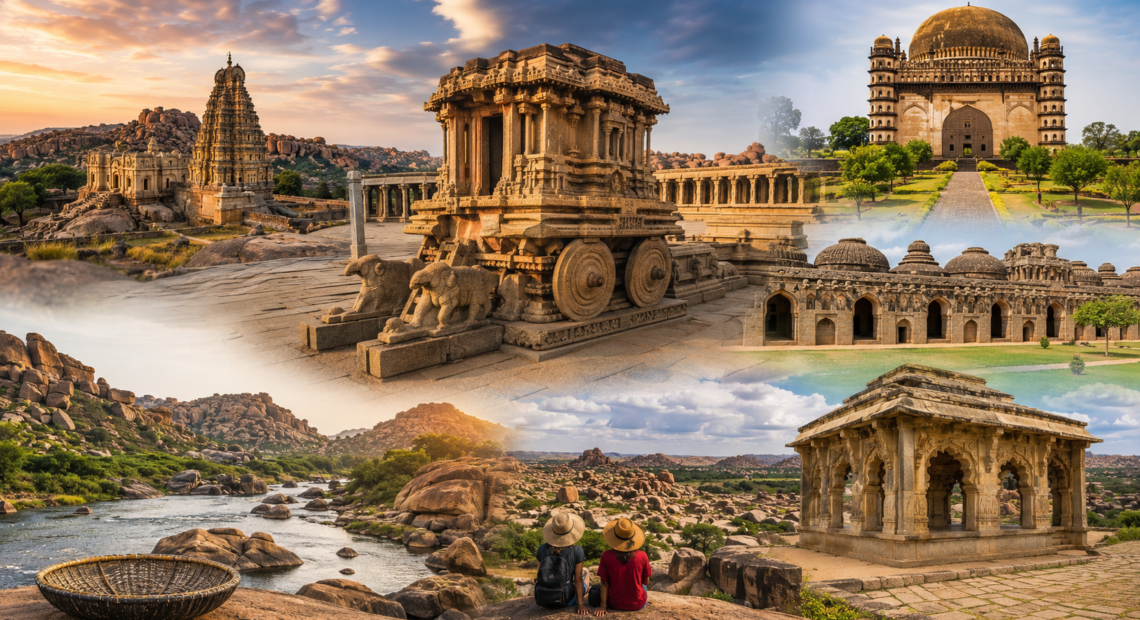
A road trip that covered Mughal history and the glory of the Vijayanagar empire at Hampi in Karnataka
Curiosity sparked by my son’s college trip to Hampi, I decided to drive down to experience the majesty of this vast kingdom in Karnataka that goes back to 1500 AD. We mapped the 700 km road trip from Mumbai, and decided to take an overnight stopover; visit the famous Vithoba temple at Pandharpur; stay over at Sholapur before proceeding to Northern Karnataka to do a bit of Bijapur before the final halt at Hampi.
At the crack of dawn, we hit the expressway to reach Pune, and head towards the highway for Satara. But after the Katraj tunnel one of the really long ones almost 1.5km long, make sure you ask around after the food malls, and take the correct left turn which takes you to Pandharpur. It’s a state highway and full of scenic spots – large lakes, with cattle grazing, local shepherds in bright pink turbans manning the sheep, fields of crops and rustic farm houses, it’s another world altogether – watching them as we drive by, it sets the mood for the rest of the holiday.
Temple and Monuments
Our first halt was the Vithoba temple at Pandharpur. Parking the car at a distance from the temple, we walked through the lanes flanked with tiny colourful stores that sold malas, sindoor, Prasad, idols, bells, and a variety of puja items. The most visited temple in Maharashtra, it is the main centre of worship for Vitthal, believed to be a form of Lord Krishna or Vishnu and his consort Rakhumai.
Once done with the temple visit, we decided to take a break and stay over at Sholapur. There are decent hotels with reasonable tariffs. Next morning, after breakfast, it was a smooth drive to the Karnataka border where we entered to reach Bijapur. The roads were laden with bright cheerful sunflowers. We headed towards the Ibrahim Rouza monument, shrouded in mystery and history. It was built in 1580 and completed in 1627, and consists of his tomb and mosque. An architectural wonder it has many elements that balance and define the structure.
You can hire a guide for just Rs 200 and he takes you through both the majestic structure and narrates the story of Imbrahim Rouza. Our next stop was the Gol Gumbaz, another architectural marvel from times gone by. The mausoleum of Mohammed Adil Shah, Sultan of Bijapur; this mammoth structure famous for its majestic dome was completed in 1656 by architect Yaqut of Dabul.
Post lunch, we started for Hampi. The highway stretched into the horizon, smooth and easy, picture perfect with the blue skies above, the sunflower fields appearing at intervals and the pink rocks and boulders appeared – the first sign of Hampi! Since it was almost evening, we drive straight to our hotel – located in the Vidyanagar complex.
After checking in, we had dinner and were ready to explore Hampi the next morning. The friendly staff hotel informed us to have a look at Kaladham, open till late evenings, a precursor to the glory of Hampi. It was the best thing we could have done that night – an interactive tour at Kaladham, a dedicated gallery that’s the work of a quarter of a century of chronicling the sights at the site.
The Glory of Hampi Unfolds
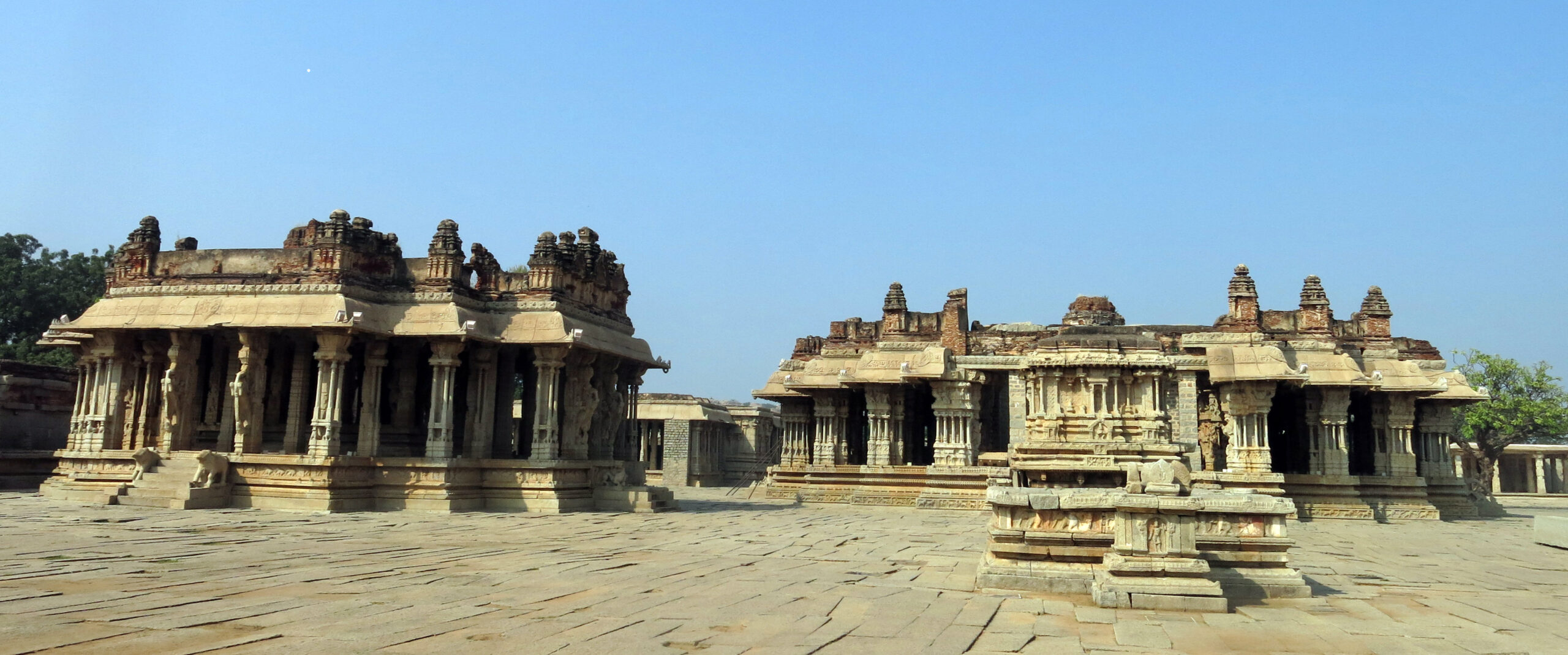
Since we had an idea about how to manage the vast kingdom, we started, drove down past the Daroji Bear Sanctuary, taking the right from Kamalanagar, to our first site of Hampi – the Vitthal Mandir. The Jain temple at the beginning of the route was a first feel of the historic city lying in ruins today. After parking the car, we proceeded in an electric buggy – manned by young, uniform-clad local women – on a one kilometre ride to the entrance of Vitthal Mandir. And there it was, the grand chariot, exquisitely carved in stone and standing the ravages of time, looking stunning and impressive even after centuries. After walking around the complex, taking in the sheer scale and grandeur of the place, we walked down to the Tungabhadra right behind the Vitthal mandir, where coracle rides ply on busy days and warning boards of crocodiles and tricky undercurrents spell the dangers of the river to the visitors.
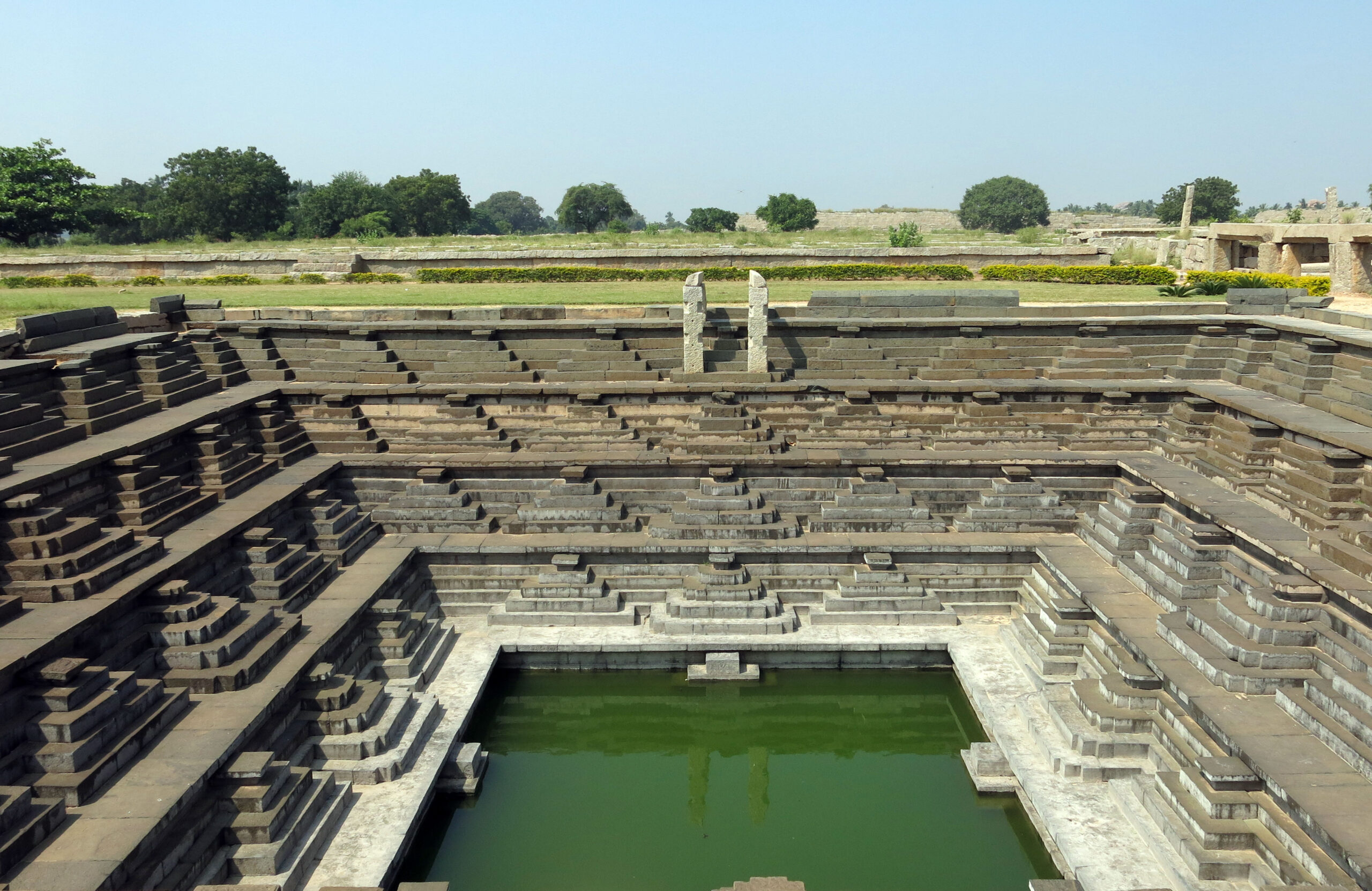
After a breather on the riverside, we drove down to the other side and started with the string of earmarked sites that are just a few minutes apart – and the best part is you can pretty much drive right up to the gate of all the sites in Hampi. Having the car is a great way to cover Hampi’s historic monuments. From the Lotus Temple and Elephant stables to Ganesha Temples and Shiv Ling-Narsimha statues; from the stepped water tank with its own purification system to the Queen’s Palace, and finally the Virupaksha temple that is the sole live temple with its idols intact and where puja is conducted with enthusiastic participation by the visiting hordes.
Hampi stays with you long after you leave. The glory of the kingdom and the grandeur now visible in its ruins.