Middle Class Crisis – The Industrial Revolution India Needs

By,
Ravi Saini
Associate Editor,Unique Times &
CEO, RSW (Resetting Sustainable Wealth) Group
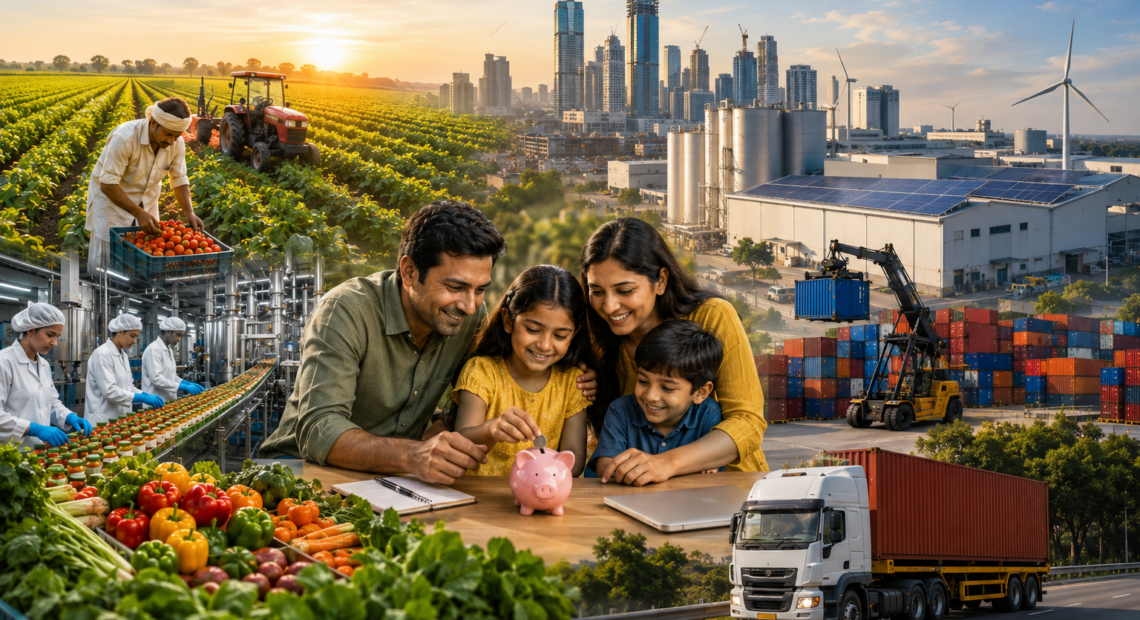
Ramesh Sharma, a 38-year-old working professional in Delhi, begins his day before sunrise. With a stable job, a respectable salary, and dreams for his children’s future, he represents the ambition of India’s middle class. On paper, his life looks secure.
But every month tells a different story.
His salary has inched up over the years, yet his expenses have surged ahead—school fees, fuel costs, groceries, and EMIs. The same basket of essentials now costs significantly more. Vacations have been postponed indefinitely. Dining out has become occasional. Savings, once a priority, have turned into a struggle. Ramesh is not alone. Millions of families across India live this quiet contradiction—earning, but not progressing; working harder, yet feeling financially stuck. Their demand for a better life is rising, but the supply of affordable opportunities is not keeping pace.
This is the real face of India’s middle-class crisis—not loud, not visible in headlines, but deeply felt in households.
The Silent Squeeze: Crisis of Higher Demand and Lower Supply
India’s middle class today stands at a critical crossroads. Aspirations are rising faster than ever before, but the economic system is struggling to support them. This imbalance can be best understood as a crisis of higher demand and lower supply.
On one side, there is a surge in demand—better housing, quality education, healthcare, mobility, and lifestyle improvements. On the other side, the supply of affordable goods, stable jobs, and scalable industries has not expanded at the same pace.
The result is inevitable: inflation and financial stress.
When demand outpaces supply, prices rise. The depreciation of the rupee further amplifies this issue by making imports—fuel, electronics, raw materials—more expensive. This reduces supply in critical sectors and pushes costs onto consumers.
At the same time, job creation has not kept pace with the growing workforce. While opportunities exist, many are either low-paying, unstable, or mismatched with skills. The outcome is underemployment, stagnant wages, and rising uncertainty.
This is not just an economic slowdown—it is a structural supply-side weakness.
“When demand rises faster than supply, the middle class pays the price.”
Why Rupee Devaluation is a Blessing in Disguise
A weakening rupee is often viewed with concern. It makes imports expensive and adds pressure on household budgets. But this is only one side of the story.
The other side reveals opportunity.
A depreciating rupee makes Indian goods and services more competitive globally. What becomes expensive domestically can become attractive internationally. This creates a powerful incentive to produce more within India and export more to the world. The key lies in building domestic supply, and one of the most promising sectors to achieve this is food processing.
India is one of the world’s largest producers of agricultural commodities—fruits, vegetables, grains, dairy, and spices. Yet a significant portion of this output is either wasted or exported in raw form with minimal value addition.
By investing in food processing industries, India can:
- Convert raw produce into high-value, export-ready products
- Reduce wastage and improve supply efficiency
- Increase farmers’ incomes
- Generate large-scale rural and urban employment
At the same time, global demand for affordable, high-quality food products is rising. A weaker rupee makes Indian processed food even more competitive in international markets.
This creates a powerful alignment:
India’s agricultural strength + global demand + favourable currency = economic opportunity
Food processing, therefore, becomes more than an industry—it becomes a bridge between India’s supply potential and global consumption needs.
“A weak currency pushes a strong nation to produce more.”
The Industrial Revolution India Needs
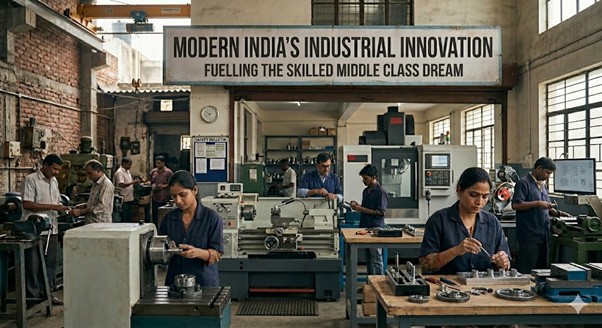
To resolve the crisis of higher demand and lower supply, India must undergo a new industrial revolution—one focused on expanding supply capacity across sectors.
This transformation must go beyond traditional manufacturing and include high-impact industries like food processing, renewable energy, MSMEs, and decentralised production ecosystems. The goal is simple yet powerful:
Increase supply to match aspirations.
Key pillars of this revolution include:
- Expanding Production Capacity
India must scale up industries that can meet both domestic and global demand. - Strengthening Supply Chains
Better infrastructure, logistics, and storage systems are essential to reduce inefficiencies and wastage.
- Encouraging Entrepreneurship
Local manufacturing and small businesses must be empowered as engines of growth. - Skill Alignment
Education must shift from theoretical learning to practical, industry-relevant skills. - Collaborative Ecosystems
Investors, entrepreneurs, policymakers, and communities must work together to create inclusive growth.
A strong production ecosystem will not only stabilise prices but also create jobs, boost incomes, and restore confidence in the middle class.
“Supply creation is the real solution to inflation and unemployment.”
From Consumption to Creation
The middle-class crisis is not a dead end—it is a signal. A signal that India must rebalance its economic model. At its core, the issue is clear:
Demand is rising, but supply is not keeping up.
Rupee depreciation, instead of being feared, should be understood as a trigger for transformation. It is nudging India towards self-reliance, export growth, and industrial expansion.
By focusing on sectors like food processing, horticulture with animal husbandry and manufacturing, India can:
- Bridge the demand-supply gap
- Empower its middle class
- Reduce import dependence
- Strengthen its global position
The way ahead is not complicated—it is decisive:
Produce more. Waste less. Compete globally.
India stands at a defining moment. The choice is clear – to remain a nation that consumes, or to become a nation that creates.
“The future of the middle class and the nation depends on that choice.”
Pic Courtesy: pegasus/ images are subject to copyright