Labour Codes to Boost Women’s Workforce and Productivity in Electronics Sector
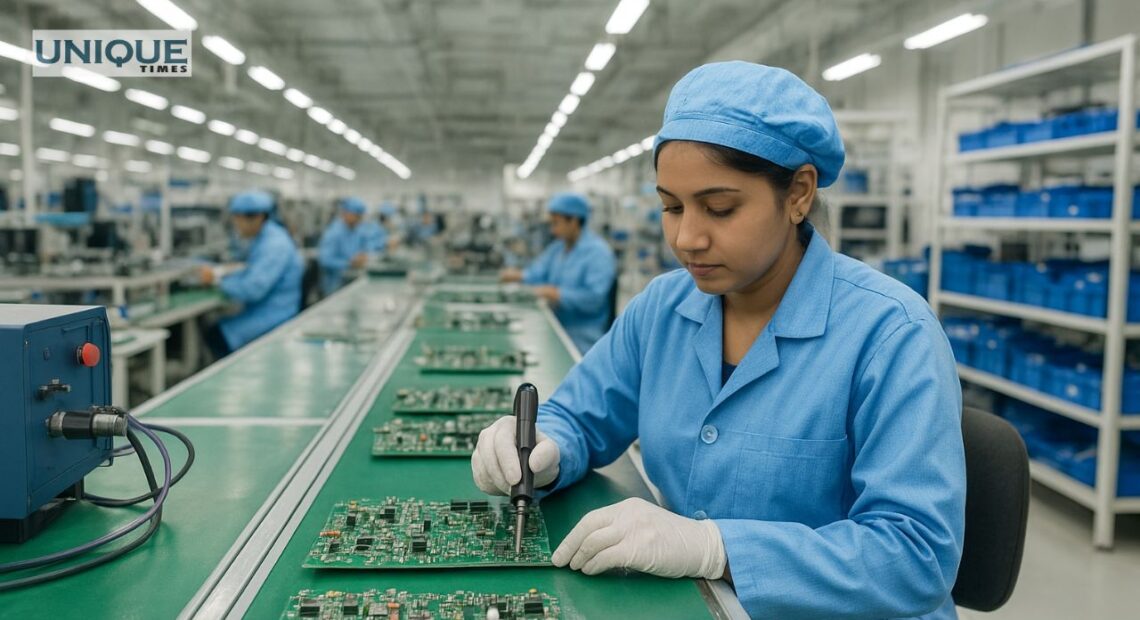
India’s electronics manufacturing industry has welcomed the implementation of the four long-pending labour codes, stating that they will strengthen workforce trust, reduce attrition, and significantly expand women’s participation. The India Electronics & Semiconductor Association (IESA) said the reforms will improve health and safety standards, provide stronger social protections, and support long-term skill retention, creating a more worker-centric ecosystem within the electronics system design and manufacturing (ESDM) sector.
The codes, which cover wages, social security, industrial relations, and working conditions, mandate safer factory environments and allow women to work across all roles—including night shifts—under strict safety protocols. Industry bodies highlighted that this change will help widen the talent pool in semiconductor assembly and 24×7 production units, where women already form a major segment of the workforce. A 2024 Quess Corp report shows women constitute 78% of employees in the electronics sector, especially in assembly, testing, and quality control roles.
The India Cellular and Electronics Association (ICEA) said provisions such as an 8-hour workday, overtime pay at double rate, fixed-term employment, and simplified compliance will enhance productivity and improve work-life balance. While IESA noted short-term challenges such as increased compliance costs and the need for stronger HR systems, the organisation emphasised that the reforms will ultimately make India’s ESDM and semiconductor ecosystem globally competitive and boost sustainable job creation.
Pic Courtesy: google/ images are subject to copyright