Ireland’s Reality Check: What Lies Ahead For Team India

By
Anup V Menon
Sports Analyst and Knowledge Partner
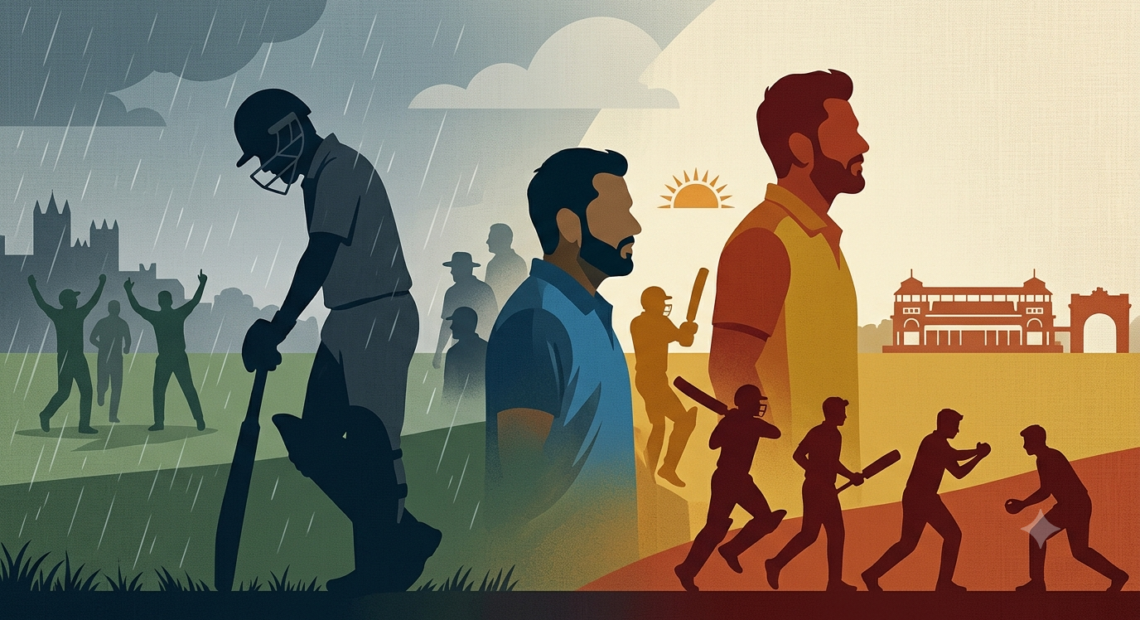
The Indian team got off to a far from ideal start as they resumed their T20 campaign with a two-match series against Ireland. The Men in Blue were humbled by a spirited Irish side that outplayed them with both bat and ball.
Fresh off a glorious World Cup triumph, Indian cricket entered a new era. With Shreyas Iyer taking over the captaincy from Suryakumar Yadav, the team also ushered in a host of exciting young faces. The most anticipated among them was Vaibhav Suryavanshi, the latest Indian wonder kid. After his exploits in the IPL, it was only a matter of time before he donned the Indian colours. He is yet to get game time though as he was seen warming the benches in Ireland.
However, things did not go according to plan in Ireland. India looked completely out of sorts in both matches. To begin with, I believe the team was guilty of overconfidence and underestimated the Irish challenge. The world champions perhaps forgot that they were stepping into unfamiliar conditions against a home side that was far better prepared to exploit them.
The game has undoubtedly evolved at a breath-taking pace. Yet, I firmly believe that playing according to the situation still holds immense value, even in the shortest format. Today’s T20 cricket often revolves around relentless aggression from the very first ball, but we sometimes forget that quality deliveries deserve respect. Not every ball has to disappear into the stands. Equally important is the ability to respond proactively to difficult match situations. Waiting for things to happen rarely works in T20 cricket. India’s inability to adapt was in my opinion, one of the biggest reasons behind this disappointing series.
What led to this thrashing?
India’s struggle to adapt to seaming pitches and expansive outfields was glaringly evident. The slow outfields and swirling winds only compounded their problems. As mentioned earlier, none of the Indian batters showed the determination to grind it out when conditions demanded it. Instead, they seemed intent on replicating the high risk, boundary hitting approach that works so often in the IPL. In the process, wickets were thrown away cheaply,
making the batting line-up look surprisingly fragile. The champions were swiftly brought back down to earth by an Irish side that few would have backed before the series began.
Shreyas Iyer, leading India for the first time, looked far less assured than he has during his successful IPL captaincy stints with Kolkata Knight Riders and Punjab Kings. His tactical awareness appeared wanting on occasions, and his own batting form did little to inspire confidence.
Ireland, meanwhile, seized every key moment of the contest. Whenever India slipped, they capitalised without hesitation. Talent has never been India’s concern. What was lacking was adaptability, decision making, tactical awareness and execution.
India will need to snap out of this slumber quickly as they prepare for a far sterner challenge against England. The rub of the green will not always be in our favour if these shortcomings remain unaddressed. An IPL style approach simply will not guarantee success in overseas conditions.
There is no doubt that this Indian side possesses the talent to compete with the very best in the world.
Having said that, the management must continue to back this young team. It would be unfair to judge a new captain-coach combination on the basis of one disappointing series. Building a successful team is a process, and it will naturally take a series or two before the leadership group identifies the right combinations.
Going forward, India must improve its tactical awareness, learn to read pitches better, and adjust its batting tempo according to conditions. Preconceived plans do not always work, and both the batters and bowlers must be willing to adapt quickly.
The batting approach needs refinement, with greater emphasis on game awareness rather than blind aggression. Fielding standards must improve considerably, as they remain a decisive factor in modern T20 cricket.
The selectors and the team management should persist with this transition and continue investing in young talent. More importantly, they must give this core group sufficient time to grow together. Ireland should be viewed as a valuable lesson rather than an unfortunate anomaly.
This is very much a work in progress. The potential within this Indian team is undeniable, and I have little doubt that they can once again become world beaters. It is simply a matter of time.
The FIFA World Cup fever is beginning to reach its crescendo as the tournament heads into the business end. Watch this space. An exciting deep dive into the magic, drama and defining moments of the FIFA World Cup is just around the corner.
Until next time. Ciao!