Rajnath Singh Refuses to Sign SCO Document Over Terror Language, Highlights India’s Stand on Pahalgam Attack
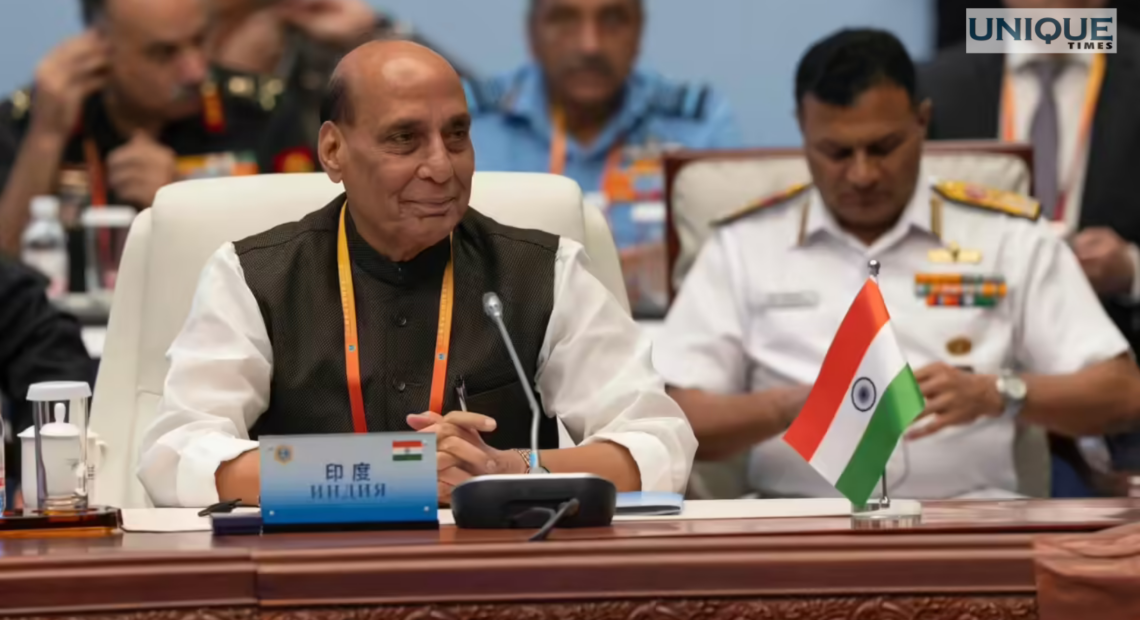
In a strong display of India’s uncompromising stance against terrorism, Defence Minister Rajnath Singh refused to sign the Shanghai Cooperation Organisation (SCO) joint document during the summit in Qingdao, China. The refusal came after the document failed to acknowledge the Pahalgam terror attack, in which 26 tourists were killed by Pakistan-trained terrorists. Sources revealed that the statement instead included incidents from Pakistan and attempted to dilute the narrative on terrorism, prompting India to withhold its signature and block the release of a joint communique.
Tensions were palpable as Singh came face-to-face with his Pakistani counterpart Khawaja Asif for the first time since the Pahalgam incident and India’s retaliatory Operation Sindoor. No pleasantries were exchanged between the two leaders. Singh strongly condemned Pakistan’s use of terrorism as state policy, stating that epicentres of terror are “no longer safe” and reiterated India’s resolve to carry out pre-emptive strikes to dismantle cross-border terror infrastructure.
Calling on SCO member nations to shed double standards, Singh urged the grouping to unequivocally condemn nations that support terrorism. He also reaffirmed India’s commitment to peace and stability in Afghanistan. The Resistance Front (TRF), an offshoot of Lashkar-e-Taiba, had claimed responsibility for the Pahalgam attack. Earlier, Pakistan, reportedly with China’s backing, succeeded in getting TRF’s name omitted from the April 25 UN Security Council statement on the incident.
Pic Courtesy: google/ images are subject to copyright