
Iran Conflict Stalls Indian Basmati Exports
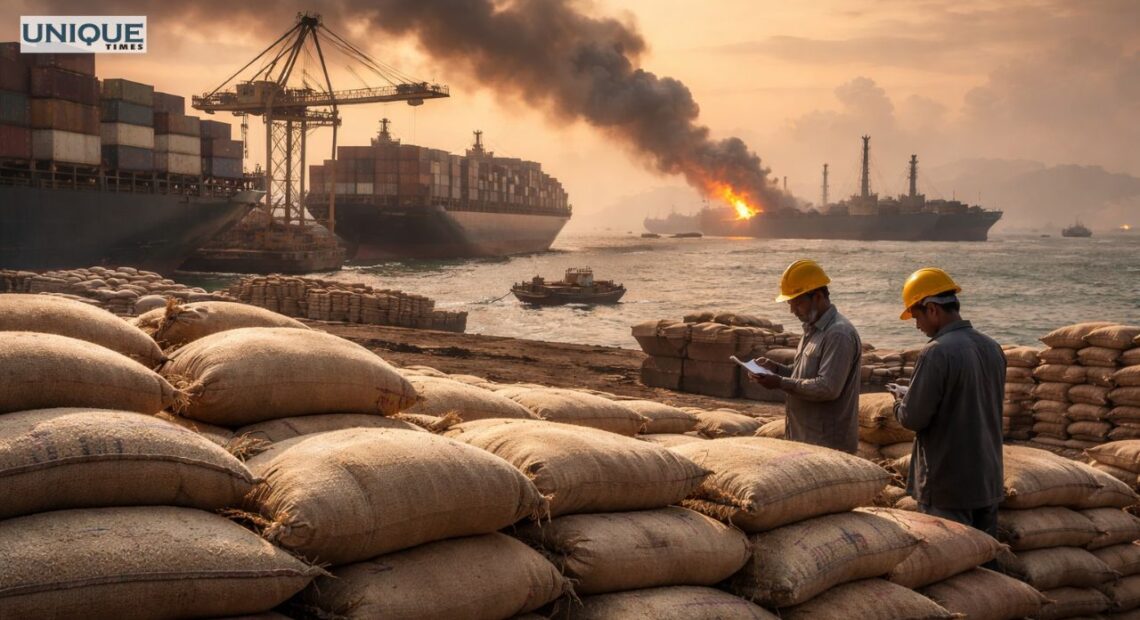
India’s basmati rice exports have been severely disrupted after U.S. and Israeli strikes on Iran triggered wider conflict across the Middle East. Around 400,000 metric tons of basmati rice — roughly split between cargo in transit and stocks at Indian ports — are currently stranded as shipping routes face turmoil and freight rates have more than doubled. Exporters say vessels are avoiding the Strait of Hormuz after attacks on tankers and energy infrastructure, while insurers have withdrawn coverage, compounding delays.
India, the world’s largest exporter of premium basmati rice, relies heavily on Middle Eastern buyers such as Saudi Arabia, Iran, and the United Arab Emirates, which together account for more than half of total shipments. With no alternative markets able to absorb such large volumes, exporters have halted new deals and are prioritizing existing contracts. The All India Rice Exporters’ Association has approached the government for support as traders grapple with rising storage costs and freight charges.
The disruption comes on the heels of a record basmati harvest in India, adding pressure to domestic prices, which have fallen nearly 6% amid the export slowdown. Traders describe the situation as unprecedented, warning that prolonged instability could force some exporters to invoke force majeure clauses. Despite the setback, industry players remain confident that demand from the Middle East will rebound once the conflict eases, given the region’s strong reliance on Indian basmati supplies.
Pic courtesy: google/ images are subject to copyright






