Indian Banks’ Bad Loan Ratios Seen Improving, but NBFC Risks Rise: RBI Report
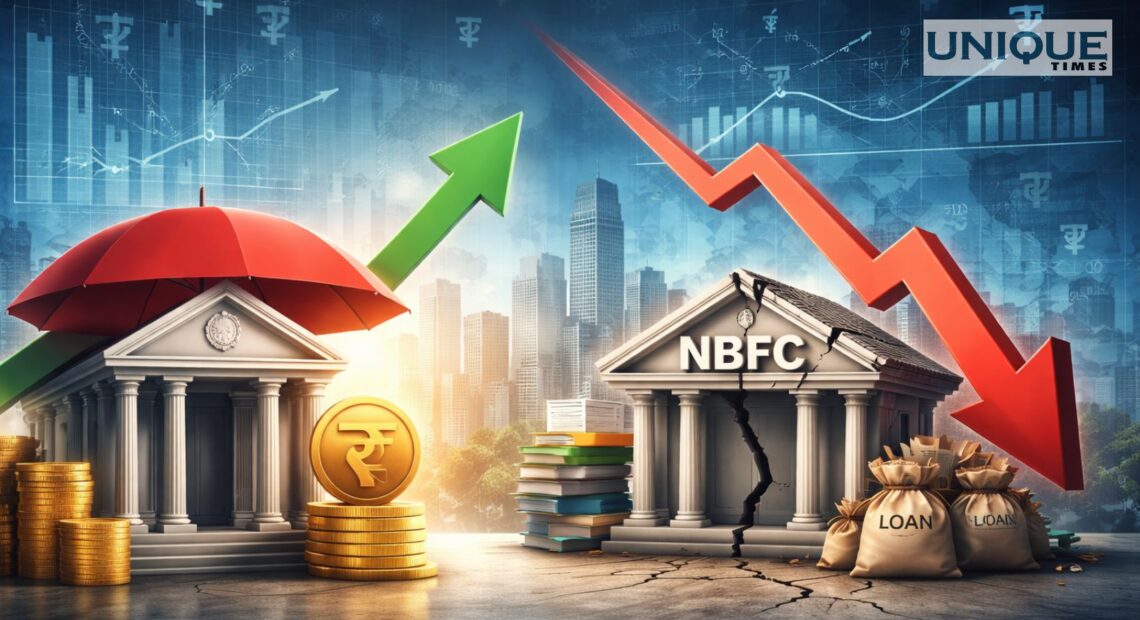
Indian banks may see their gross bad loan ratio fall further from already low levels in the coming financial year, even as early signs of stress emerge among non-bank lenders, according to the Reserve Bank of India’s latest Financial Stability Report released on Wednesday. The central bank said gross bad loans could decline to 1.9% by March 2027 under its baseline scenario, compared with 2.1% at the end of September 2025, supported by resilient economic growth and strong financial system fundamentals.
However, the RBI cautioned that risks are building up in the non-banking financial company (NBFC) sector and among insurance firms. Stress tests conducted on 174 NBFCs showed their gross bad loan ratio could rise to 2.9% by September 2026 from 2.3% a year earlier, with higher fresh slippages and growing write-offs indicating emerging pressure in loan portfolios. The central bank also flagged rising cost pressures in the insurance sector that could weigh on profitability, even as banks remain well-capitalised and stable.
Reiterating its concerns over crypto-related risks, the RBI warned against the increasing global acceptance of stablecoins, arguing that their potential threats to macro-financial stability outweigh perceived benefits. The central bank said it “strongly advocates” prioritising central bank digital currencies over privately issued stablecoins to preserve trust in money and safeguard financial stability, while acknowledging broader external spillover risks that could test the system in the near term.
Pic Courtesy: google/ images are subject to copyright