Indian Farmers Turn Paddy Stubble into Income by Selling It to Biomass Firms
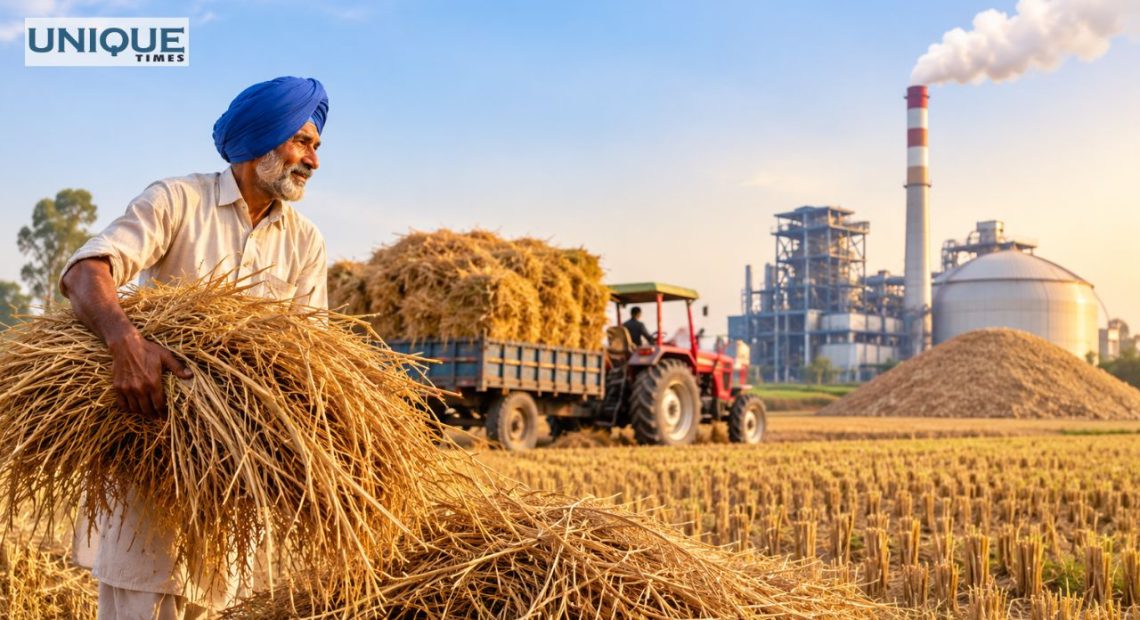
Farmers in India’s Punjab state are increasingly selling paddy stubble to biomass companies instead of burning it after harvest, creating an alternative source of income while helping reduce crop-residue fires. The waste is collected, transported and converted into fuel for electricity generation, offering a potential solution to the seasonal stubble-burning problem that contributes to severe air pollution across northern India.
In Faridkot district, farmers, tractor operators, drivers and labourers are part of a growing supply chain that delivers agricultural residue to biomass power plants. One processor, Amandeep Singh Gill, said his business supports the livelihoods of up to 70 families. His operation cost around 45 million rupees to establish and can generate annual turnover of 70 million to 80 million rupees. The collected straw is eventually supplied to an 18-megawatt biomass plant operated by SAEL Industries.
Punjab recorded 5,114 farm fires during the 2025 harvesting season, a 53% decline from 2024 and an 86% drop from 2023. However, Delhi’s air quality remained hazardous in mid-November, highlighting that the biomass industry is still too small to make a significant difference to regional pollution. SAEL Industries plans to purchase 2 million tonnes of agricultural residue this year, while analysts say minimum support prices for paddy straw and standardised procurement agreements could encourage further growth.
Pic courtesy: google/ images are subject to copyright