Kerala’s Snake Boat Racers Defy Floods and Financial Strain
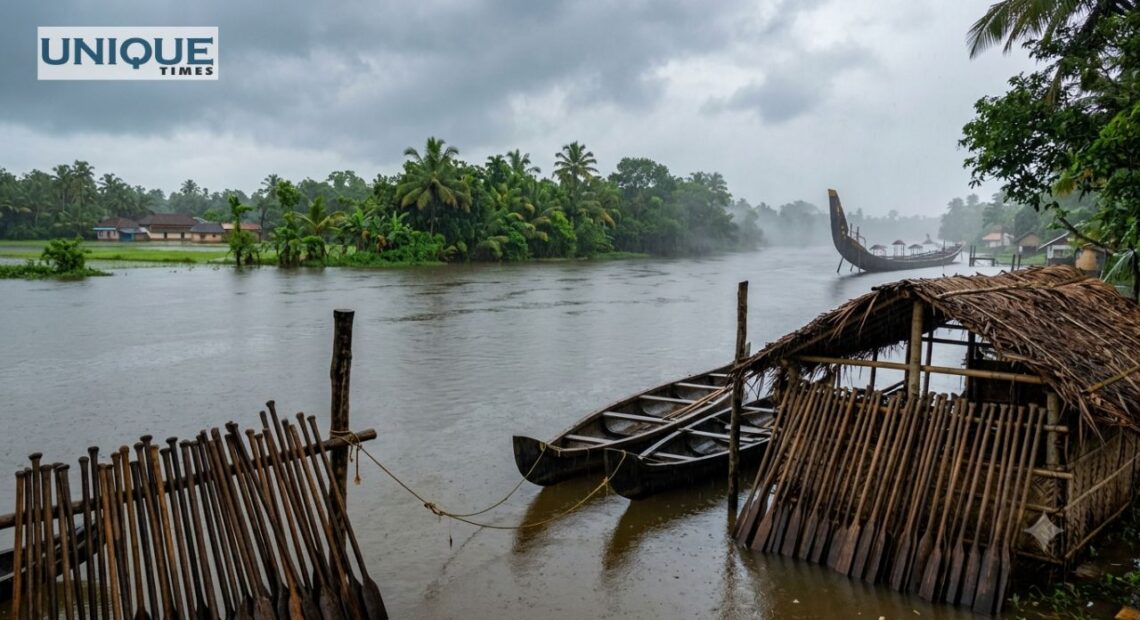
Despite severe monsoon flooding that has displaced thousands across Kerala, local communities and rowing clubs are pushing forward to keep the centuries-old tradition of vallam kali (snake boat racing) alive. Around 20 massive wooden vessels—each measuring roughly 100 feet long and powered by nearly 100 oarsmen—are set to compete over a 1.4 km course on Punnamada Lake for the prestigious Nehru Trophy. Even as heavy rains submerge roads and homes in low-lying regions like Kainakary, teams such as the 12-time champion United Boat Club have maintained a rigorous twice-daily practice schedule on the swollen Pamba River.
These iconic 13th-century battle canoes serve as deep cultural symbols of unity, transcending religious and social lines. Community-owned boats like “Veeyapuram” carry sacred blessings from Hindu, Christian, and Islamic traditions, with race chants reflecting a shared cultural heritage. Beyond their cultural resonance, the vessels command immense local reverence; retired snake boats are traditionally cremated in rites that mimic human funeral rituals to honor their legacy.
However, sustaining this historic sport comes at a daunting financial cost for the local villagers who own and maintain the vessels. Launching a new boat can exceed 9 million rupees ($94,300), while annual running expenses near 7 million rupees ($73,000)—costs that far outweigh the returns from modest sponsorships and prize purses. Despite minimal financial backing from the government and the persistent threat of natural disasters, the village communities remain resolutely committed to funding and preserving their prized boats for future generations.
Pic courtesy: google/ images are subject to copyright